

Resources on writing
Books about craft
Some favourite books about writing (and reading):
- How Fiction Works, James Wood, Random House, 2009
- Craft in the Real World, Matthew Salessas, Catapult, 2021
- Dancing at the Edge of the World, Ursula Le Guin, Grove Press, 1989
- The Writing Life, Annie Dillard, Harper Perennial, 2013
- The Writing Book: A Practical Guide for Fiction Writers, Kate Grenville, Allen & Unwin, 2020
- A Swim in a Pond in the Rain, George Saunders, Penguin Random House, 2021
- Reading Like a Writer, Francine Prose, Harper Perennial, 2007
- Writing Down the Bones, Natalie Goldberg, Shambhala, 2016.
Here are some other people’s suggestions:
Essential books for writers (Centre for Fiction)
Ten of the best books for writers (The Creative Life)
40 best books on writing (BookFox).
Software and tools
I use Scrivener for drafting and revising, because it’s so easy to move things around and see your outline. Its metadata functions are really powerful. It’s built for writers.
At the last minute, when editing, I move the manuscript from Scrivener into Microsoft Word.
I back up all my files with Dropbox, which saves automatically and then syncs across my different machines. You might have access to some other cloud system, but whatever you do, back up, back up, back up!
I gather research notes, scribbles, and resources in Evernote – it comes with a handy web clipper which lets you save web pages – again, it syncs up across different devices.
And I use good old pencil and paper notebooks all the time too.

Writing routines
Sprints
I swear by the Pomodoro method developed by Francesco Cirillo – 25 minute writing sprints, with five minute breaks. You don’t do anything else – just write.
(You need a timer – I have a little app called Pomodairo on my laptop but you can use your phone clock or, indeed, a kitchen timer, which is what Francesco Cirillo used.)
I combine the writing sprints with two other systems (and when I say systems, that may be overstating things slightly).
Shut Up and Write
I meet up with a couple of friends to do Shut Up and Write together twice a week. We’ve been doing it for years, since we did our PhDs together, but mostly meet online nowadays. There may be a little more talking than the standard five minute breaks but that’s OK. Let’s call it industry networking (although we call it gossip). We usually get a couple of sprints in.
You can find regular online Shut Up and Write sessions now at lots of writers’ centres and at universities, or you can join the online communities. Or start your own.
Two Golden Hours
Then there’s what Hugh Kearns from ThinkWell calls Two Golden Hours. Again, this harks back to my PhD days – you block out at least two hours on as many days as you can, you assume the position, and you just write. I do four Pomodoro sprints within the two hours.
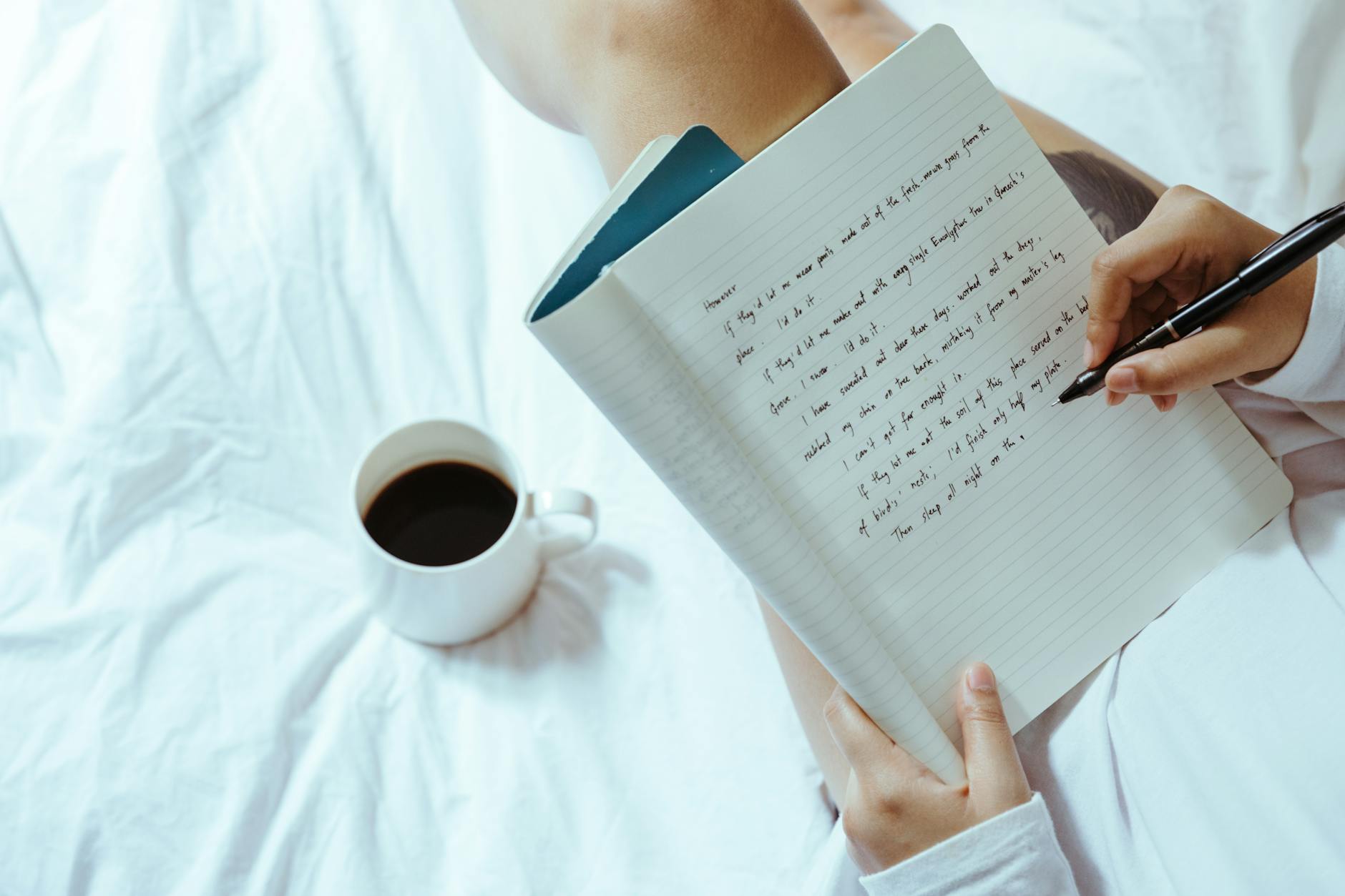
When I’m drafting, I’ll often get up early and scribble, longhand, with a pencil in a notebook – before breakfast but not before coffee.
These are all ways of keeping focus, and I find they are very productive for me, especially when I’m drafting. I don’t look at the phone, or put on a load of washing, or check social media or emails, or even look up words or information I might need. If I get stuck, I simply type an asterisk, keep going, and go back to sort that out later.
Retreats
I even use these methods when I’m on a writing retreat, although if I’m in a room by myself with no distractions, once I get started I just keep going until I get hungry.
We’ll use some of these techniques in our weekend retreats, so you can experience it for yourself.
Of course, going on retreat is the ultimate writing routine, and there are lots of different ways of doing it. I sometimes go on a weekend away with my Shut Up and Write buddies, and we rent a house, write all day, eat out, and sit around. Or there are divine places like Varuna, where you write in silence all day, then someone cooks you a fabulous meal shared with other writers – most of whom you’ve never met but who may well become friends. Or you can book yourself into a city hotel, or borrow a friend’s holiday house, or simply lock the door and stay home.
Sites like ResArtis list a huge range of paid and invited artist residencies around the world.
My writing retreat intensives are more focused on teaching and learning with some writing time. You can find out more about them here.
The main thing is to find what works for you. If you have an intense job, or small kids, or face a long commute to and from work, you might have to squeeze in whatever time you can find – before anyone else wakes up, on the train, in the quiet of the evening. I wrote my first book mostly in my work lunch breaks in a noisy noodle place in Auckland.
Writers gonna write.
 New Page Writing Retreats & Masterclasses